The short answer
To record your family's oral history, pick one relative and ask them ahead of time. Prepare eight to twelve open questions and record on your phone in a quiet room, starting with a line of consent. Ask, then listen more than you talk. The same day, write a short summary with the names, places and rough dates. Keep the original file safe, and share it with the family with that summary beside it. One hour with a grandparent this month is worth more than a perfect plan next year.
What the records can't tell you
Genealogy sites are good at records: a birth, a marriage, a ship's passenger list. They can tell you your great-grandfather arrived in 1952. They can't tell you that he carried one tin trunk, that he cried when he saw snow, or why the family never cooked his mother's dal again after she died. Those things exist only in the people who were there, and in the people they told. If you keep a tree on Ancestry, MyHeritage or FamilySearch, oral history is what turns its names into people.
Plan and record an interview
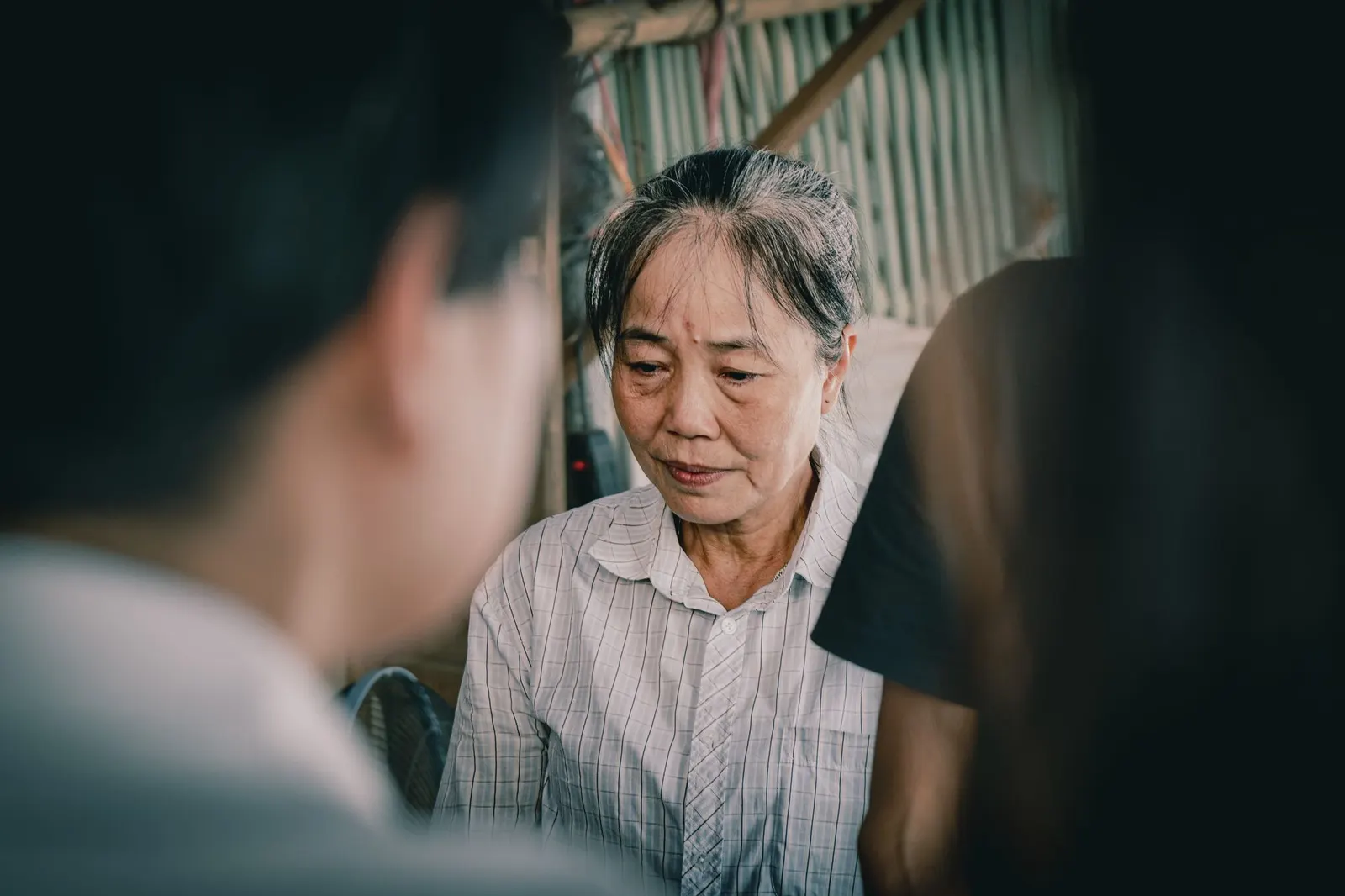
- Choose who, and ask them firstStart with the oldest relative who is willing, or the one who always tells the stories at dinner. Ask a few days ahead, say what it is for (“for the family, so the children know”), and let them pick the day.
- Prepare eight to twelve open questionsQuestions that start with “what was it like” or “tell me about” get stories. Questions with a one-word answer get one word. The table below has questions that work, grouped by theme. Pick a theme per session rather than a whole life at once.
- Set up for sound, not looksA soft room (curtains, a sofa, a rug) sounds better than a bare kitchen. Put the phone in aeroplane mode so a call doesn't cut the recording, and keep it 15 to 20 cm from the speaker, on something steady. Recording better voice notes with your phone covers the technique.
- Open with consent, on the recordingSay what it is for and ask, and let their yes be the first thing on the file. The script is below.
- Ask, then listenLet silences run; the best part often comes after a pause. Follow the story where it goes and come back to your list later. Ask for the small things: the smell of the house, what was on the table, what people were wearing.
- Stop while they still have energyTwenty to forty minutes is plenty for one sitting. End by thanking them and asking what you should ask next time.
- Write the summary the same dayWhile it is fresh, write a few lines: who is speaking, where and when you recorded, the names and places they mentioned, and the two or three moments worth coming back to. That summary is what makes the recording findable in twenty years.
| Theme | Questions that open people up |
|---|---|
| Childhood | What did your house smell like? Who lived there with you? What did you do on a holiday afternoon? |
| Names and family | Who named you, and why? Which relative were you closest to as a child? Who in the family were you told stories about? |
| Work | What was your first job, and what did it pay? Who taught you the most? |
| Moving | Why did the family move? What did you carry? What did you miss for years afterwards? |
| Food and festivals | Which dish meant home? How was your family's festival different from the neighbours'? Who cooked, and who got the first plate? |
| Love and marriage | How did you meet? What did your parents think? What happened on the day? |
| Looking back | What surprised you about growing old? What do you want the grandchildren to know about you? |
Ask about smells, recipes and first jobs, not only dates. The dates you can look up.
Hard memories
Many families carry stories of loss: Partition, war, migration, a child who died young. Let the person decide how far to go. Ask once, gently (“would you like to talk about that time?”), and accept a no. Never push for detail on camera or on tape. Some stories are for the family only, and some are for nobody yet. Mark those in your summary and keep them out of anything you share.
Put a child on the other side of the questions
Grandparents tell children things they never tell adults. Give a ten-year-old three questions and the phone, sit nearby, and let them run it. Children ask the questions adults are too polite to ask (“were you ever in trouble at school?”), and the answers are often the best part of the archive. It also teaches the child that the family's story is theirs.
After the interview: keep it, label it, share it
- Keep the original. Copy the file off the phone the same day, name it with the date and the speaker (“2026-10-18 Nani - childhood in Lahore”), and keep it in two places of your own.
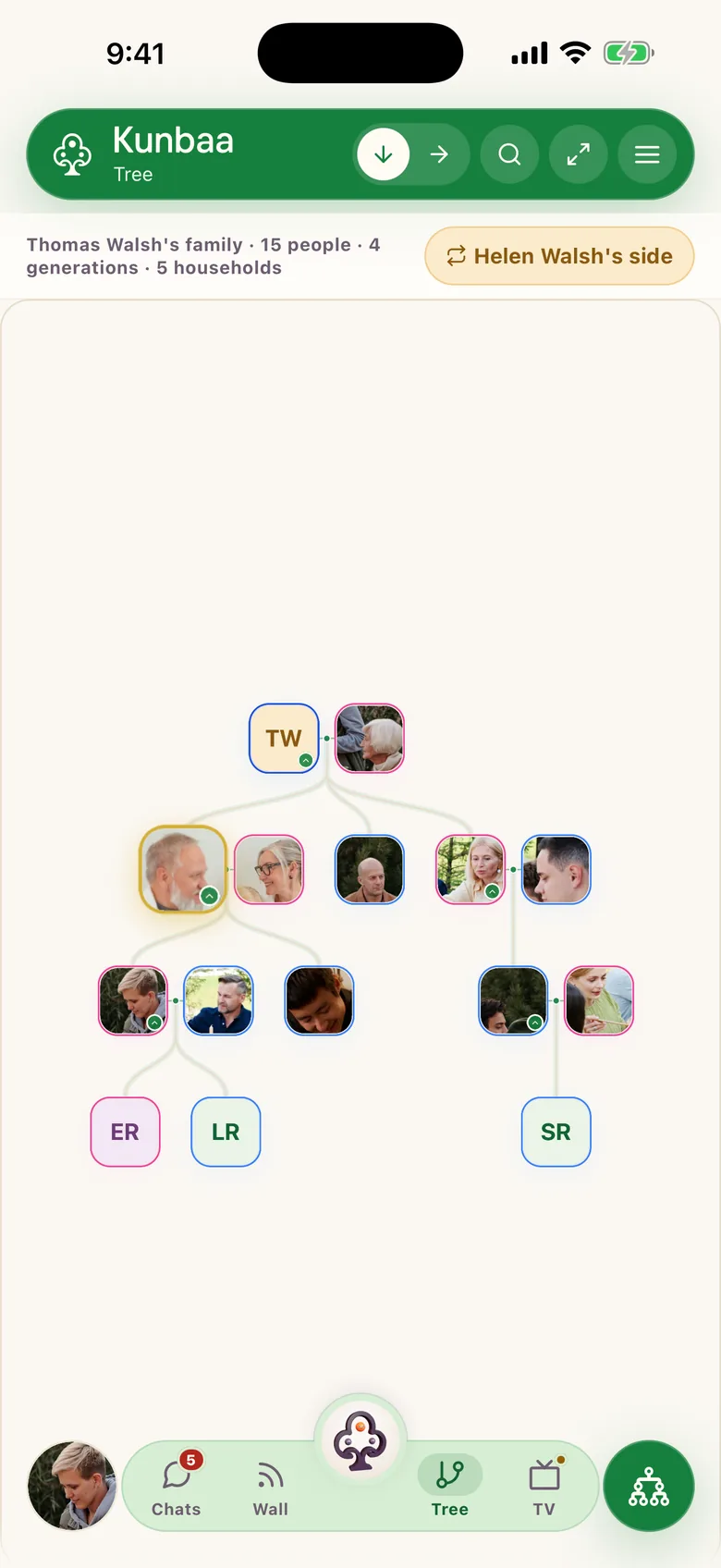
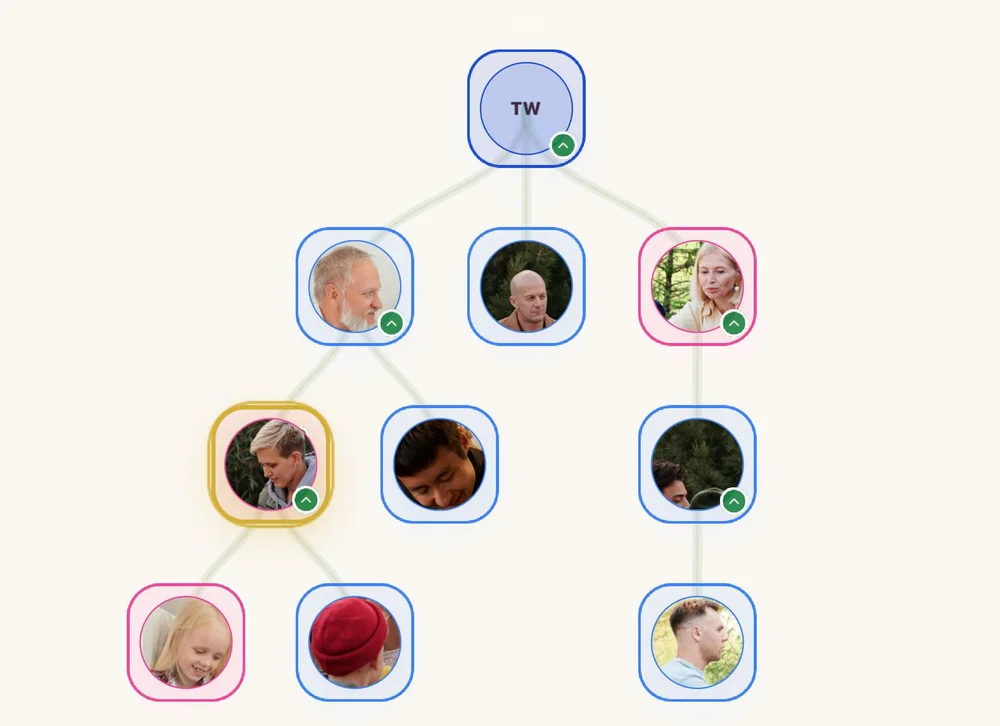
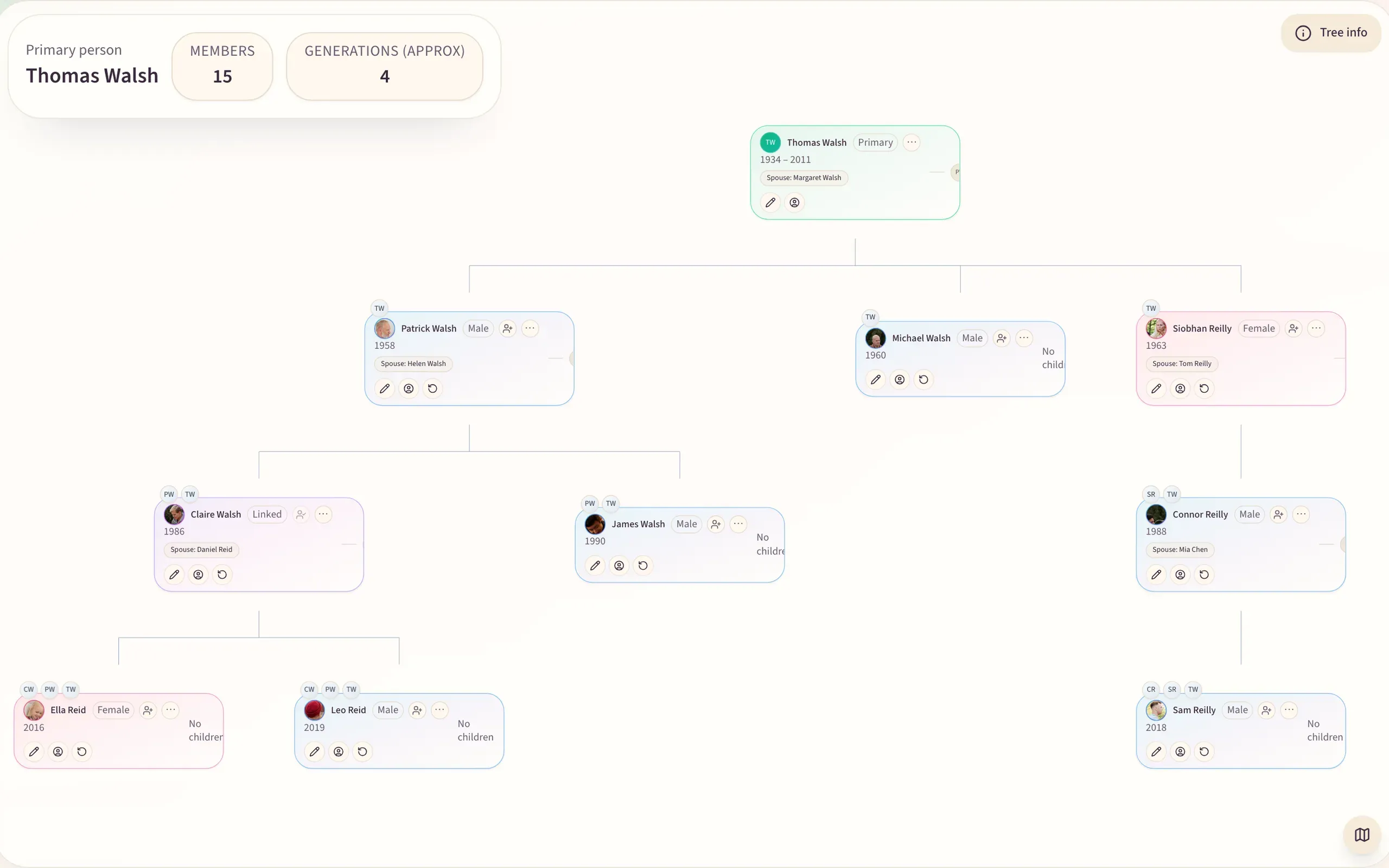
- Put the people on the tree. Add the relatives they mentioned to the family tree, with the stories in their notes: the great-uncle nobody had heard of, the village the family came from.
- Share it with the family. On kunbaa.com you can add the recording to a post on your family's wall, with your summary as the caption. Only your invited family can open it, and relatives can add what they remember in the comments.
Frequently asked questions
- What questions should I ask my grandparents?
- Open ones that invite a story: what their house smelled like, who named them and why, their first job, why the family moved and what they carried, which dish meant home, and what they want the grandchildren to know about them.
- How long should an oral history interview be?
- Twenty to forty minutes per sitting. Split a life into themes across several sessions rather than covering everything at once.
- Should I record audio or video?
- Audio is easier on most people and on the phone. Start with audio; if they are comfortable later, record a short video too.
- Can I keep the recording in Kunbaa?
- Yes. On kunbaa.com you can add an audio file to a post on your family's wall, with a caption. Record on your phone's own voice recorder first and keep the original file yourself as well; the Kunbaa app adds photos and videos to posts.
- What if the person has already passed away?
- Interview the people who knew them. Ask a sibling, a friend or a grown child for one story each, and record those. A person can be remembered through others' voices too.